

Navigating the Holiday Season While Grieving
Grief can feel different during the winter holidays, even overwhelming at times. There can be a heightened sense of who or what is absent or missing coupled with expectations of: joy, time with family, celebrations, and reflections of the past year. The New Year celebration marks a transition to a ‘new or another year’ without your person.
When grieving, the holidays and accompanying expectations can feel burdensome or even suffocating. Below are some considerations as you navigate this time of year.
Tend to Basic Needs
Sleep and appetite are commonly impacted by grief, and sometimes grief can cause or exacerbate physical symptoms such as headaches, stomach aches and symptoms of chronic illness.
Pay attention to how your basic needs have been affected during this time and try to prioritize hydration, healthy food, movement, rest and keeping up with medical care.
Permission for “It” to Be Different
Discuss whether there are certain traditions you wish to change, skip, or add given the loss. If you don’t feel like celebrating, that is okay. If you choose to attend holiday events, make a plan for how you can leave early if you begin to feel overwhelmed.
Communicate and Respect Your Boundaries
No is a complete sentence.
You don’t need to explain or justify the “no.” Give yourself permission to change your mind; it is difficult to predict how you will feel or what you can tolerate.
Meet Grief with Self-Compassion
We live in a society that sometimes has difficulty making space for grief and would rather we pretend that all is well. It can be tempting to deny and avoid the pain of grief – in reality this doesn’t make things better.
Statements of self compassion can tend to the pain: “I am doing the best I can in this moment” or “my grief makes sense.” Ask yourself what do I need in this moment to feel more comfortable? It could be some quiet time alone, gentle movement, or distraction with a trusted person.
Acknowledge the Messiness of Grief
Grief is messy. There is no checklist or timeline. Notice thoughts of self-judgement such as “I should be doing better” or “my person would want me to be happy this time of year.” Self-judgement can get very “loud” as we enter the season of expectation of joy and happiness.
Remember and Honor Your Loved One
Consider how you might feel a sense of connection to them during this season, whether on your own or within a group of friends or family. Rituals help us acknowledge the reality of the death, while also providing an opportunity to continue the relationship with the person(s) who died. Invite your support system to engage in rituals of remembering this season.
- Cook their favorite meal
- Play their favorite song or playlist
- Watch their favorite movie
- Go to one of their favorite places
- Write a letter to your person about the past year and what you want them to know
- Share stories about holidays past with trusted friends and family
Make a Plan for Hard Days
Difficult days in grief are often unpredictable and having a plan can be helpful. When creating a plan, consider:
- Who can I reach out to for support?
- Let them know they are on stand-by. Have a code word you can text when you need support. Bring a friend with you to events so they can provide support or an exit strategy when needed. Tell your support system when you need them to listen and when you need them to problem solve.
- What can I do to regulate my body and make my body more comfortable?
- Grief and grief reminders can activate our nervous system leaving our bodies feeling uncomfortable or “on edge”. Breathing strategies, gentle movement, drinking ice water can help return our bodies to a more comfortable state.
- When will I make time to tend to myself?
- Plan periods of transition in the morning and evening. Identify times during the day to pause and check in with your mind and body.
- Where can I go if I need a break in the day?
- Consider where you will be and think about a place where you can pause to tend to yourself. This could be outside, a room where you are staying, or even your car.
- How will I know when I need to regulate my body?
- How does your body tell you it is activated? A tight chest or jaw, cold or hot hands, or tension in your head or neck. Practice pausing and checking in with your body.
Most of all: Be Gentle With Yourself
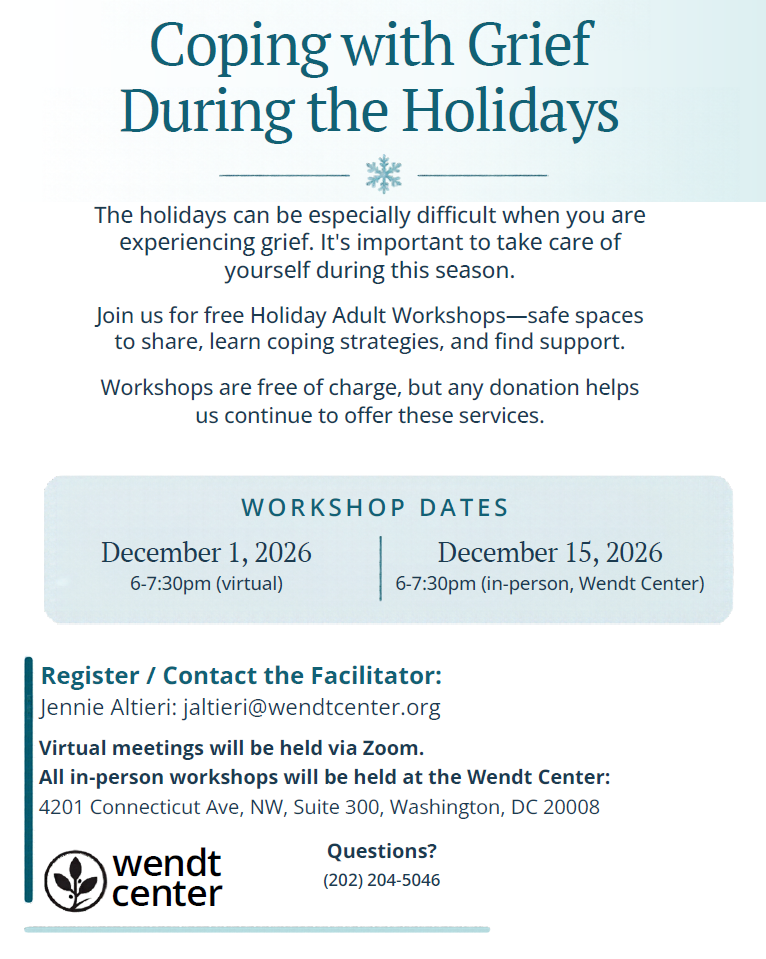
And if you find yourself wanting to connect with others during this holiday season, consider joining our free workshop below.
If you have the capacity and are interested in donating to help us continue offering services and information like this, please click below: